museuly

smarter way to book attractions

  • Top 10
  • Add Attraction
  • Blog
  • Sign Up
  • Log In
Primary
  • Top 10
  • Add Attraction
  • Blog
  • Sign Up
  • Log In

The Regional Museum of Pljevlja

Pljevlja
Featured
Login to bookmark this Listing
2 Reviews
Add Photos

Claim "The Regional Museum of Pljevlja"

Claim Listing
Write a Review

The Regional Museum in Pljevlja was opened in 1952. The museum premises consist of several rooms of the Centre for Culture in Pljevlja. The richness and diversity of holdings imposes the need for finding the proper premises to meet the basic requirements of modern museums.
The Museum holds, collects, processes and presents museum items from the area of Pljevlja.

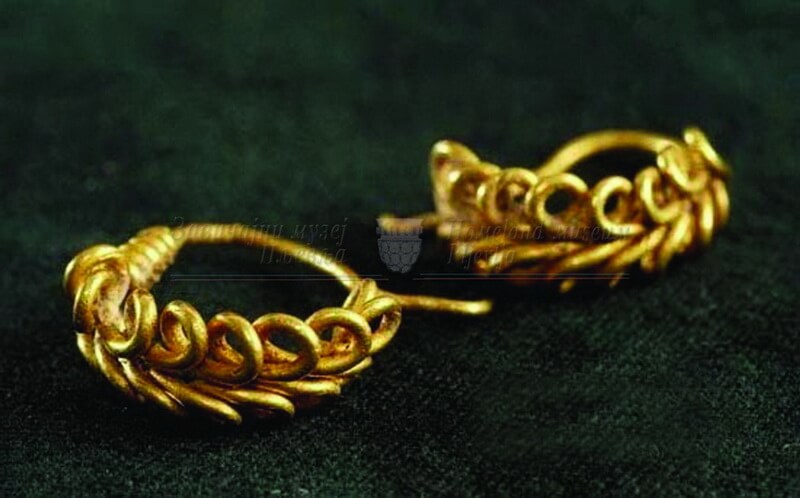
The holdings have been classified into several collections: archaeological, ethnographic, historic, numismatic and artistic. The extremely rich fund and large study material from the previously investigated sites, virtually continuously monitors the history of human life in the region of Pljevlja area of the early prehistory to the present.

Valuable items from the archaeological collection illustrate the significance of archaeological sites in the area. The items found at the site of Medena stijena (rocks in the Ćehotina River Canyon) are of particular importance. The items found in this site belong to the cultures of early Palaeolithic, Mesolithic, Copper and Bronze Age. The stone tools from the oldest layers of Medena stijena show certain similarities with the excavations at Franchti Cave in Argolid Gulf in Greece. The items from Medena stijena and several more natural shelters in the Canyon of Ćehotina River prove that this area of Montenegro was intensively inhabited during late Pleistocene. There are also remnants of an ancient town known among scientists as the Municipium S…

Based on the displayed epigraphic monuments, it may be presumed that this town existed from the 1st–4th centuries AD. The monuments from this site are particularly interesting and significant for comprehending the development of the Roman art, here intermingled with the local, Illyrian- Celtic tradition.

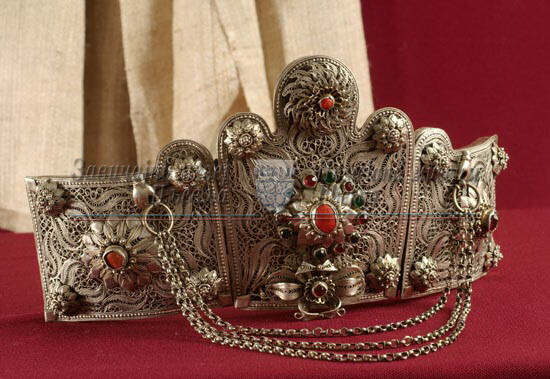
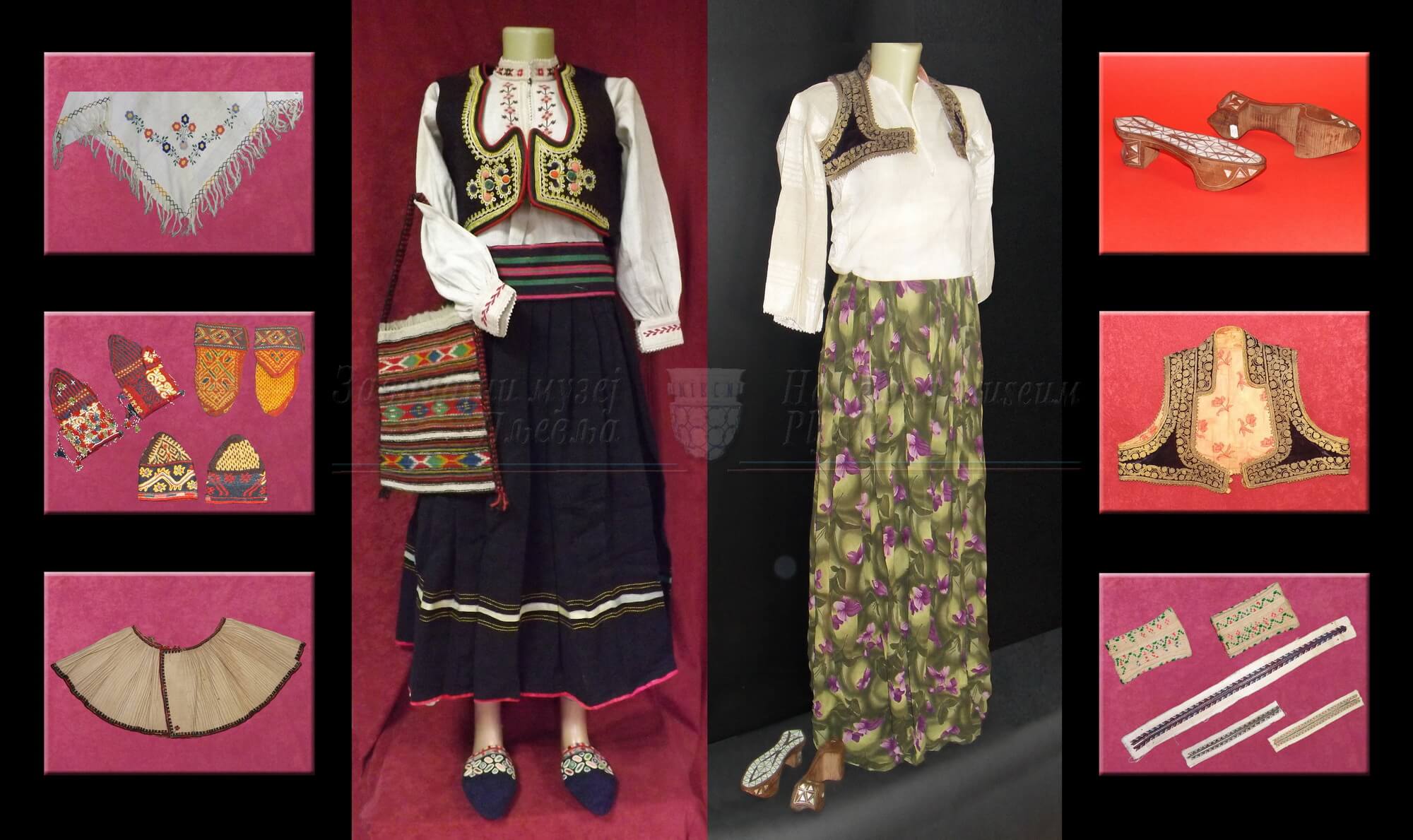
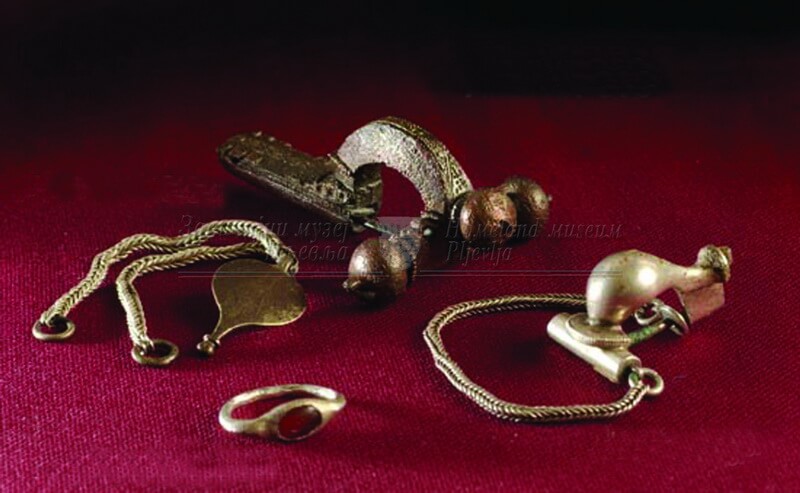
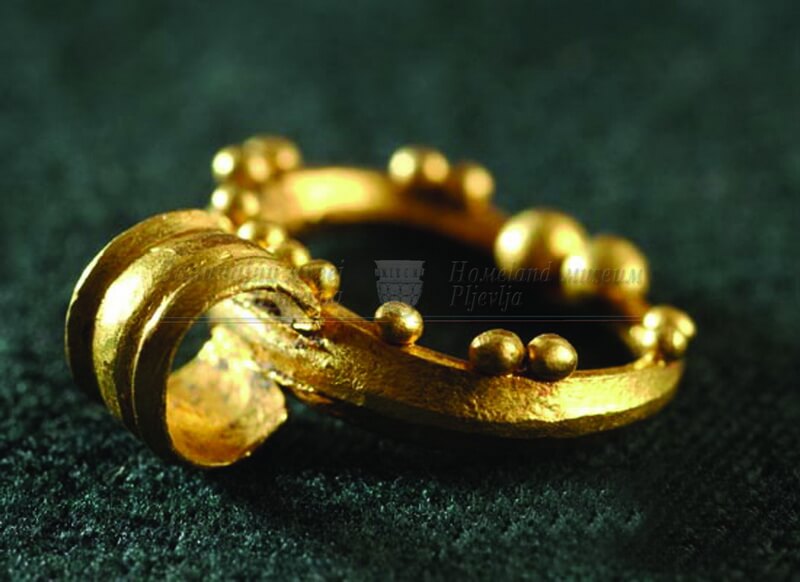
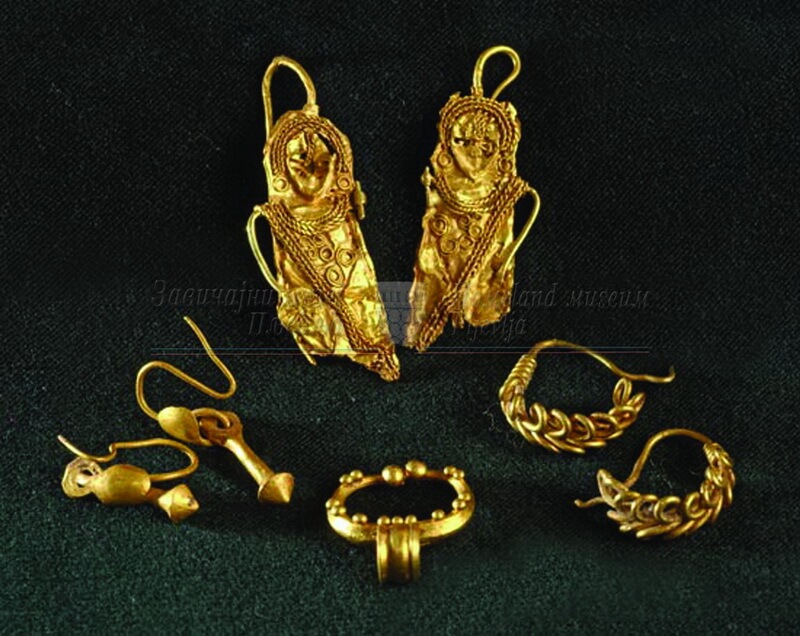
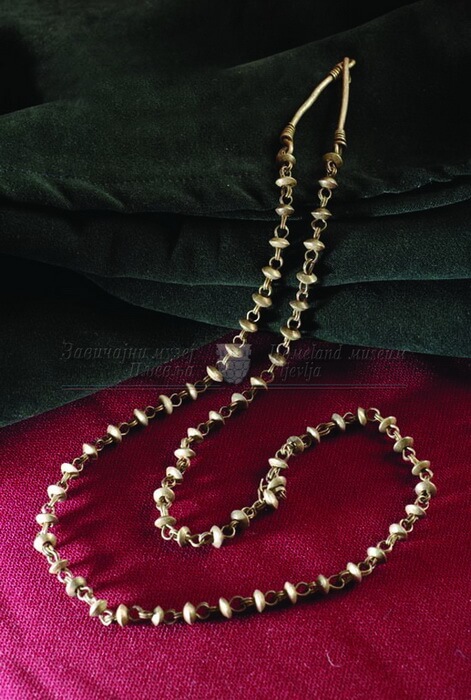
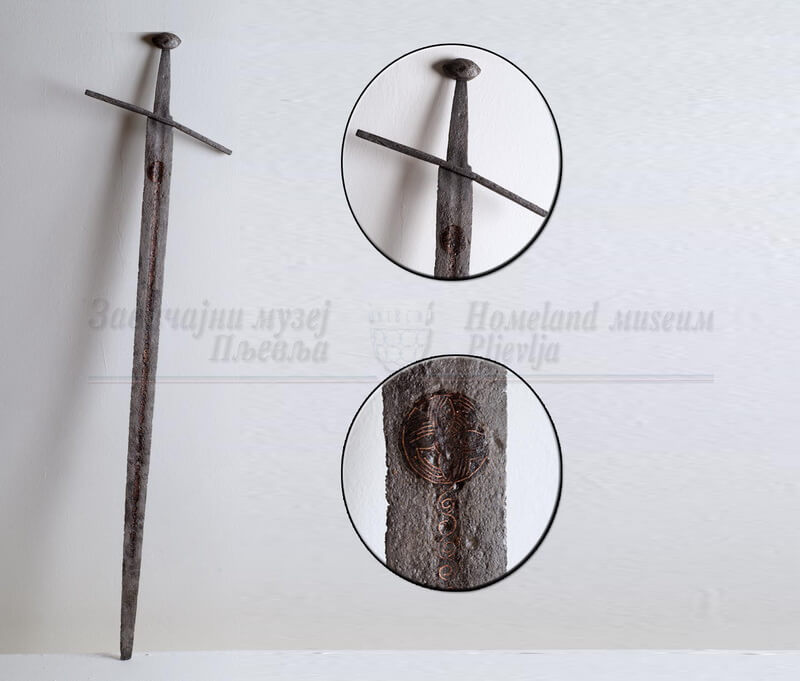
The Ethnographic Department holds over 1,000 items representative of the material and spiritual culture of the local population. Valuable old costumes, embroidery, jewellery, weapons and items with pronounced artistic features, reflect well-developed craftsmanship.
The Historic Department houses the items related to the Balkan Wars and World War One and Two.

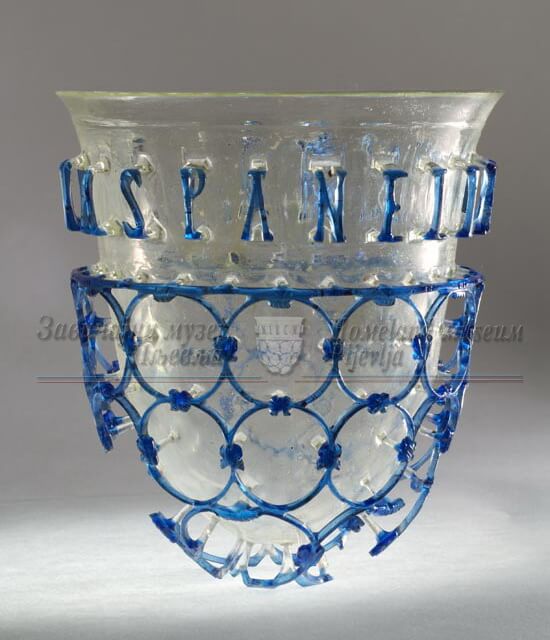
The star attraction of the Museum is Pljevlja Diatreta, an exquisite glass ‘cage cup’ from the 4th century AD.

Pljevlja Diatreta (cage-cup, beaker with inscription)
H. 14.9 cm, D 13.3 cm
Deep blue over colorless

Pljevlja Diatreta is a well-preserved cage cup from the 4th century AD. It is made of transparent colourless glass with a cobalt blue web. A cage cup consists of an inner beaker and an outer cage or shell of decoration that stands out from the body of the cup, to which it is attached. Pljevlja diatreta is a very rare example of a complete Roman cage cup , or diatretum. It comes from a famous workshop in Cologne.

Almost complete. In the inscription, the letter “O” is damaged and the “M” is missing, and both the middle and bottom rows of meshes and the rosette have sustained damage. Found during the excavation of a Roman cemetery at Komini (Roman Municipium S) near Pljevlja, northeastern Montenegro, in 1975. The object is a bell-shaped beaker with a shallow raised molding at the junction of the rim and the wall, bellow which is a Latin inscription: “VIVAS PANELLENI BONA(M)” (May you live, Panhellenius, in good memory).

Beneath the inscription ia sa cage consisting of three rows circular meshes, with a central sexfoil rosette at the bottom. The uppermost row contains the same number of oval meshes, and the bottom row contains six heart-shaped meshes. Both the inscription and the cage are deep blue.

The beaker was found in a stone and brick-lined grave, which had been robbed before the excavation. The grave contained a lead sarcophagus without a cover. in the sarcophagus was the skeleton of a man, about 50 years old. The offerings that had not been robbed were four glass vessels, including the cup.

Rate & Write a Review

Sort By

  1. regionalmuseum Listing Owner

    One of the best and richest museums in Montenegro

    9 years ago
  2. Tomislav Lalic

    Very valuable archaeological collections.

    9 years ago

Cancel reply

Your Rating

Related Listings

    Monday 7:00 am – 3:00 pm

    Tuesday 7:00 am – 3:00 pm

    Wednesday 7:00 am – 3:00 pm

    Thursday 7:00 am – 3:00 pm

    Friday 7:00 am – 3:00 pm

    Saturday Closed

    Sunday Closed

    Pljevlja
    +382 (0) 52 322 002
    muzejpv@t-com.me
    muzejpljevlja.com
    Get Directions

    • Facebook URL
    • Google+ URL

    Video

    Get more quotes – join 2000+ dreamers!

    • Ebook – everyday quotes
    • + Add Attraction
    • + Add article
    • About
    • Press
    • Help
    • Privacy Policy
    Copyright museuly © 2026. All Rights Reserved
    • Instagram
    • Facebook
    • Twitter
    • LinkedIn

    Login

    Lost your password?